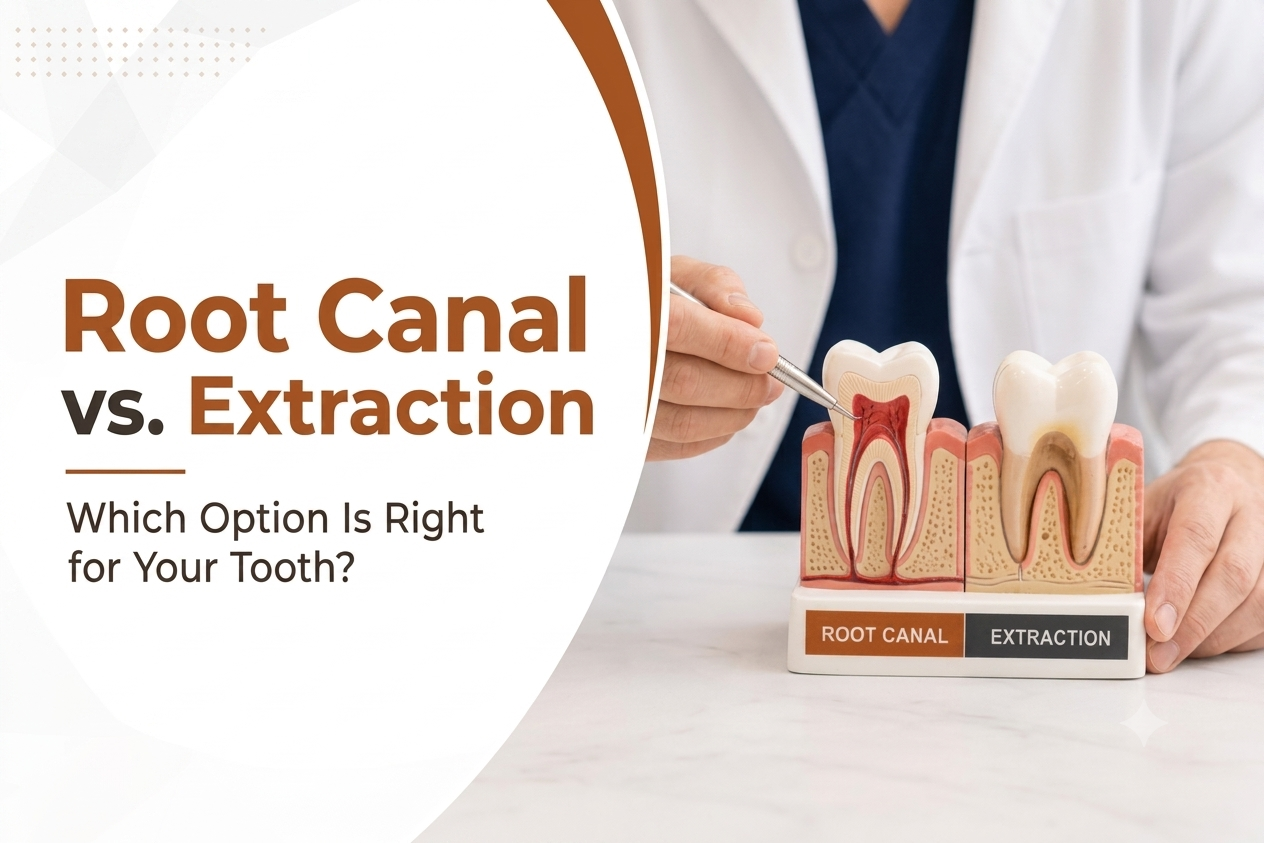
A root canal removes infected or inflamed pulp while preserving the natural tooth, and is generally considered when a tooth remains restorable with a reasonable long-term prognosis. Extraction removes the tooth entirely and may be recommended when it cannot be predictably saved. The right choice depends on an examination and imaging of your specific tooth.
Quick Comparison: Root Canal vs. Extraction
| Factor | Root Canal | Extraction |
|---|---|---|
| Main goal | Remove infected pulp and preserve the natural tooth | Remove a tooth that cannot be predictably restored |
| Natural tooth preserved? | Yes | No |
| When considered | Tooth is restorable with a reasonable long-term prognosis | Extensive decay, fracture, or infection makes the tooth unrestorable |
| Recovery | Typically mild tenderness for a few days | Days of healing; timeline depends on the extraction site |
| Follow-up treatment | Often a dental crown or other final restoration | Possible replacement with an implant, bridge, or partial denture |
| Long-term considerations | Natural chewing function; no impact on neighbouring teeth | Bone and gum changes over time if the space is left unaddressed |
What Is a Root Canal?
A root canal, also called endodontic treatment, addresses a tooth whose inner pulp the soft tissue containing nerves and blood vessels has become inflamed or infected. This can happen because of deep decay, a crack that has reached the pulp, or trauma to the tooth.
During treatment, the dentist removes the affected pulp from the crown and root canal system, then cleans, disinfects, and shapes the space before sealing it. Because a tooth that has had root canal treatment is more prone to becoming brittle, a final restoration such as a dental crown is often recommended afterward to protect the remaining structure and restore normal biting function. The goal throughout is to keep the natural tooth in place and functioning.
What Is a Tooth Extraction?
Extraction is the removal of a tooth from its socket. It may be recommended when a tooth has lost too much structure to be reliably restored, when a fracture extends below the gumline, when infection has caused significant bone loss around the tooth, or when the tooth’s position or condition makes long-term success unlikely.
After extraction, the socket goes through a natural healing process over the following days and weeks. Depending on which tooth was removed and the patient’s chewing and alignment needs, replacement with a dental implant, bridge, or partial denture may be considered though not every extracted tooth requires replacement, particularly for some wisdom teeth.
Root Canal vs. Extraction: Which Is Better?
Neither option is automatically better for every patient. A root canal may be considered when the tooth is restorable and has a reasonable long-term prognosis, since it allows the natural tooth to remain in the mouth. Extraction may be considered when the tooth cannot be predictably restored, or when attempting to save it is unlikely to succeed over time.
This is not a decision that can be made from a description of symptoms alone. It depends on a clinical dental examination and appropriate imaging to assess how much healthy structure remains, whether there is a fracture, and how the surrounding bone and gum tissue look.
6 Factors That Help Determine the Right Choice
- Remaining healthy tooth structure. A tooth with enough sound structure left to support a filling or crown is generally a better candidate for a root canal.
- Cracks or fractures. A fracture confined to the crown may still allow the tooth to be restored, while one that extends into the root often does not.
- Extent of decay or infection. Localized infection may respond well to root canal treatment, while extensive decay that has destroyed most of the tooth reduces the chances of a lasting restoration.
- Bone and gum support. Adequate bone and gum support around the root helps a treated tooth function long term; significant bone loss can affect the prognosis.
- Long-term restorability and prognosis. The dentist considers not just whether the tooth can be treated today, but whether it is likely to function well for years afterward.
- Patient goals and treatment considerations. Personal preferences, overall oral health, timeline, and how the tooth fits into your broader dental plan all factor into the decision.
What Happens If You Choose Extraction?
After a tooth is removed, the socket typically heals over the following one to two weeks, though full bone remodelling continues for longer. Missing teeth can, over time, lead to gradual shifting of neighbouring teeth, changes in how you chew on that side, and bone loss in the area where the tooth used to be.
Depending on the location and function of the extracted tooth, your dentist may discuss replacement options, including:
- Dental implant — a titanium post placed in the jaw to support a replacement crown (see dental implants)
- Dental bridge — a fixed restoration anchored to neighbouring teeth (see dental bridges)
- Partial denture — a removable option that replaces one or more missing teeth
Not every extraction requires replacement some back teeth, particularly wisdom teeth, can be removed without ongoing consequences. Your dentist can help you weigh the pros and cons for your specific situation.
Root Canal vs. Extraction: Cost and Recovery
Comparing only the price of the initial procedure can be misleading, since each path involves different follow-up steps.
The root canal pathway typically looks like: examination and imaging → root canal treatment → a final restoration such as a crown, when needed.
The extraction pathway typically looks like: examination → extraction → healing → replacement with an implant, bridge, or denture, if appropriate.
Actual costs depend on the complexity of treatment, the restoration required, insurance coverage, and your individual treatment plan. For patients in South Calgary, Heritage Pointe, De Winton, and Okotoks, dental fees can vary between procedures and providers and may be influenced by the Alberta Dental Fee Guide. Your dentist can provide a written estimate specific to your tooth after an examination.
Which Procedure Hurts More?
Both procedures are performed with local anesthesia, so patients are numb during treatment and typically feel pressure rather than pain. Afterward, discomfort varies from person to person and depends partly on how inflamed or infected the tooth was beforehand.
Mild soreness for a few days is common after either procedure and can usually be managed as your dentist advises. If pain worsens instead of improving, or if swelling develops, contact your dental office persistent or worsening symptoms after either treatment should always be discussed with a dentist.
Questions to Ask Your Dentist
- Is my tooth restorable?
- How much healthy tooth structure remains?
- Is there a crack or fracture, and how far does it extend?
- What is the expected long-term prognosis for this tooth?
- What would happen if I chose to extract it instead?
- Will I need a crown or other restoration after a root canal?
- If the tooth is removed, should it be replaced, and with what?
- What are the expected costs of each treatment pathway?
When Should You Seek Urgent Dental Care?
Dental infections can occasionally progress beyond the tooth itself, so it’s worth knowing when to seek prompt assessment rather than waiting for a routine appointment. Contact a dentist or seek urgent dental care if you notice facial or gum swelling, fever alongside dental pain, difficulty swallowing, or difficulty breathing, or if your symptoms are rapidly getting worse. These signs warrant timely evaluation.
Root Canal vs. Extraction: The Bottom Line
If a tooth is restorable and has a reasonable long-term prognosis, a root canal may be an option for preserving it. If a tooth cannot be predictably restored, extraction may be the more appropriate path forward. The right choice for your tooth depends on an individual dental evaluation, not general symptoms alone.
If you’re in Heritage Pointe, South Calgary, or a nearby community such as Walden, Legacy, Cranston, Seton, Auburn Bay, Mahogany, De Winton, or Okotoks and need to weigh your options for a damaged or painful tooth, the team at Heritage Pointe Dental can examine the tooth, review imaging, and walk you through what each pathway would involve for your specific situation.
Frequently Asked Questions
Is a root canal better than an extraction?
Neither is automatically better it depends on the tooth. A root canal preserves your natural tooth when it’s restorable with a reasonable prognosis. Extraction may be recommended when a tooth can’t be predictably saved. An exam and imaging help determine which applies to your situation.
Is it cheaper to pull a tooth or get a root canal?
Extraction alone often costs less upfront, but comparing initial prices can be misleading. A root canal may need a crown afterward, while an extraction may lead to replacement with an implant, bridge, or denture. Total cost depends on your full treatment plan.
How do I know if my tooth can be saved?
This depends on factors like remaining healthy structure, whether there’s a crack or fracture, the extent of decay or infection, and bone support. Only a dental examination with appropriate imaging can determine whether a tooth is a good candidate for a root canal.
What happens after a tooth is extracted?
The socket heals over roughly one to two weeks, with bone remodelling continuing longer. Neighbouring teeth may gradually shift over time if the space isn’t addressed. Your dentist may discuss replacement options such as an implant, bridge, or partial denture, depending on the tooth’s role.
Does a root canal hurt more than an extraction?
Both use local anesthesia, so you shouldn’t feel pain during either procedure — just pressure. Post-treatment soreness varies by person and by how inflamed or infected the tooth was beforehand. Contact your dentist if pain worsens or swelling develops after either treatment.
Do I need a crown after a root canal?
Often, yes. A tooth that’s had root canal treatment can become more brittle, so a crown or other final restoration is commonly recommended to protect it and restore normal chewing function. Your dentist will confirm whether your specific tooth needs one.