Published October 21, 2026
Medically reviewed by Dr. Dharmanshu Boghara, Heritage Pointe Dental
Your dentist most likely recommended fluoride because your teeth, or your child’s, are at higher risk of cavities, and a professional fluoride treatment gives enamel extra protection that toothpaste and tap water may not provide on their own.
It’s a common recommendation and not a sign that something is wrong. This guide explains what the treatment is, who benefits, how safe it is and what to ask at your next visit. It is general information, not a diagnosis, and your dentist’s reasons depend on your own exam.
What Is a Professional Fluoride Treatment?
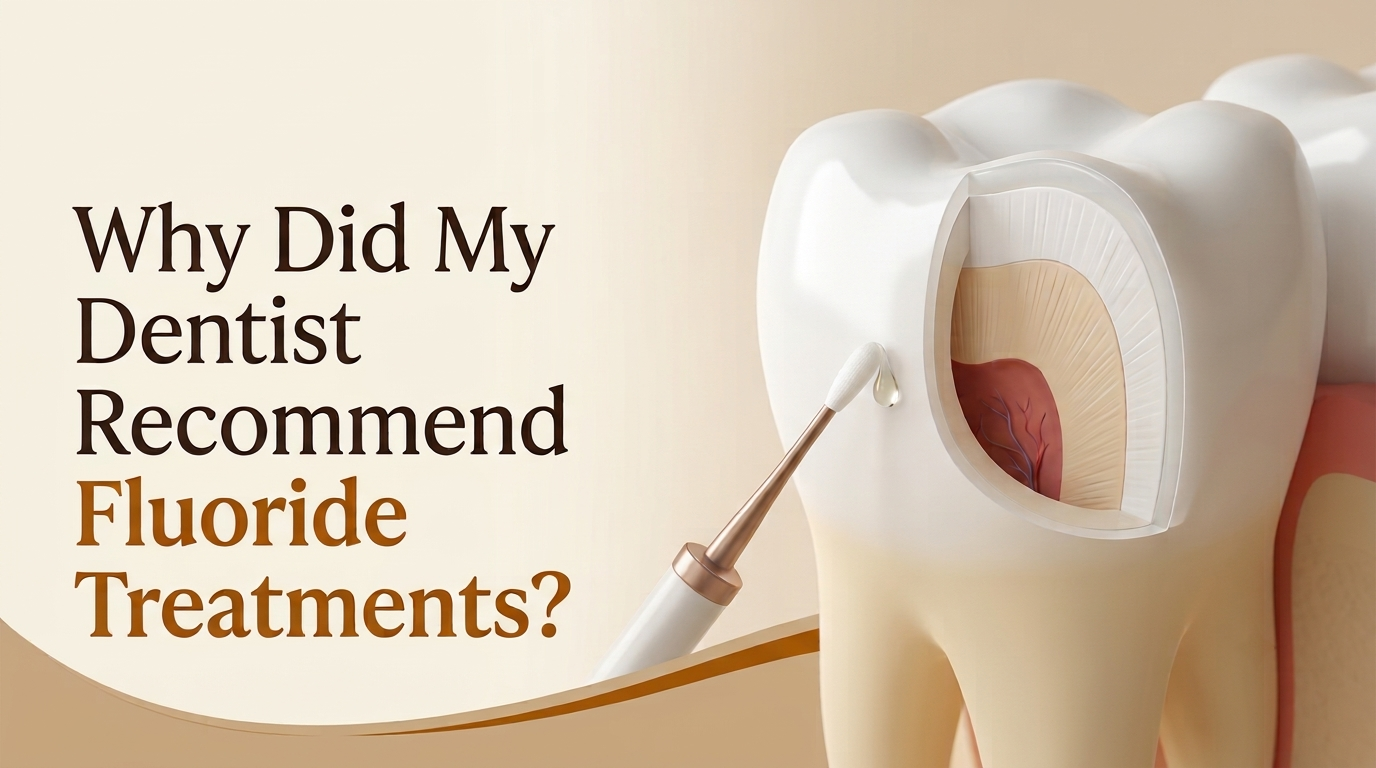
A professional fluoride treatment is a concentrated fluoride product applied directly to your teeth by a dental professional. It contains much more fluoride than daily toothpaste, but it’s used in small amounts for a short time. Fluoride helps enamel rebuild minerals lost to acid from plaque bacteria, a process called remineralization, and makes enamel more resistant to later acid attacks.
The Canadian Dental Association (CDA) lists gels, 5% sodium fluoride varnish and 38% silver diamine fluoride as professional options to discuss with your dentist.
| Type | How it’s applied | Good to know |
|---|---|---|
| Varnish | Painted on the teeth; sets quickly | Commonly used for children because little is swallowed |
| Gel | Placed in a tray or brushed on | Used for older children and adults |
| Foam | Placed in a tray | Not recommended for children under six, per an American Dental Association panel |
| Silver diamine fluoride | Liquid applied to a cavity | Used to help stop decay in selected cases |
Why Your Dentist May Recommend It
Dentists don’t apply fluoride to everyone automatically. The CDA ties professional fluoride to a cavity risk assessment, and an American Dental Association panel recommends it for people at elevated risk of cavities (ADA clinical recommendations, 2013). Common reasons include:
- A history of cavities or new decay since your last visit
- Early enamel damage, such as white spots that haven’t become cavities yet
- Dry mouth, which can come from some medications, because saliva helps protect teeth
- Braces or other appliances that make cleaning harder
- Exposed root surfaces, for example after gum recession, which decay more easily than enamel
- Frequent snacking or sugary or acidic drinks
- Young children with newly erupted teeth who are at higher risk
Seeing yourself on this list doesn’t mean you’ll get cavities. It means a little extra protection is reasonable. If your risk is low, your dentist may decide toothpaste and regular checkups are enough.
Does Calgary’s Water Fluoridation Change the Picture?
It can, but it doesn’t replace professional care. The City of Calgary reintroduced fluoride to its drinking water on June 30, 2025, after stopping in 2011, following a 2021 plebiscite in which 62 per cent of voters supported the change (City of Calgary). The target level is 0.7 mg/L, the amount Health Canada recommends, according to Airdrie News.
The gap mattered. A 2021 study found 64.8 per cent of Calgary children had cavities in their baby teeth, compared with 55.1 per cent in Edmonton, where water has been fluoridated since 1967 (Oral Health Group).
Fluoridated water gives everyone a little protection all day, but it doesn’t remove individual risk. If you’ve had many cavities, have dry mouth or wear braces, your dentist may still advise extra fluoride. Water sources differ between communities, so check with your own water supplier whether your tap water is fluoridated.
Is Fluoride Treatment Safe?
The CDA states that more than 50 years of research shows fluoride is safe and effective in preventing tooth decay (CDA position statement). Professional products are applied in small amounts, and the main known risk is dental fluorosis: faint white marks or streaks that can develop when children’s developing teeth get more fluoride than they need. The CDA notes that fluoride beyond what’s required to prevent decay can cause it, which is why children shouldn’t swallow toothpaste or take supplements unnecessarily.
It’s reasonable to have questions. Ask why it’s recommended for you, which product will be used and how much your child will receive. Tell your dentist about allergies, medical conditions and any fluoride products you already use.
What to Expect at the Appointment
The treatment is quick and painless, and it’s often part of a regular checkup. Usually your teeth are cleaned and dried, then the dentist or hygienist paints on varnish or places gel or foam in a tray. Varnish sets fast, which is one reason it’s common for children. You may notice a temporary film on your teeth or a slight change in taste. Your dentist will tell you how long to wait before eating or drinking and when to resume brushing, because instructions differ by product.
How Often Do You Need Fluoride Treatments?
It depends on your risk. For 5% sodium fluoride varnish, the CDA advises no more than one application per six-month period unless your dentist recommends otherwise or it’s tied to a cavity risk assessment. For people at higher risk, the American Dental Association panel recommended professionally applied varnish or gel every three to six months. A lower-risk patient may need it rarely or not at all.
Cost and Insurance
Fees vary by clinic and product, and coverage depends on your plan and often your age. Ask for an estimate and check with your insurer before treatment. Prices aren’t quoted here because they differ between clinics.
Fluoride Care at Home
Professional treatment works best alongside daily habits: brush twice a day with fluoride toothpaste, floss daily and keep up regular checkups and cleanings. For children, ask your dentist how much toothpaste to use and supervise brushing so little ones don’t swallow it. Cutting back on frequent sugary snacks and drinks also reduces how often acid attacks your enamel. The CDA recommends children see a dentist by 12 months of age or within six months of their first tooth.
Questions to Ask Your Dentist
- Which of my risk factors led to this recommendation?
- Which fluoride product will you use, and why?
- How often do I (or my child) need it?
- What will it cost, and is it covered?
- What can I do at home to lower my risk?
Frequently Asked Questions
Do fluoride treatments hurt?
No. The application is painless and takes only a few minutes. You may notice a different taste or a temporary film on your teeth.
Can adults benefit from fluoride treatments?
Yes, particularly adults with dry mouth, exposed roots or frequent cavities. Adults at low risk may not need them.
Is a fluoride treatment the same as fluoride toothpaste?
It’s the same mineral, but professional products are more concentrated and applied by your dental team. Toothpaste is for daily use at home.
Can I say no to a fluoride treatment?
Yes. The decision is yours. Ask your dentist about the alternatives and what declining could mean for your cavity risk.
Next step
If you have questions about a fluoride recommendation, your dentist can walk you through the reasons at your next visit. Call Heritage Pointe Dental at 403-873-2289 or book an appointment.