
May 28, 2026 • 8 min read
Average Dental Bridge Cost Without Insurance .For a standard 3-unit traditional dental bridge in Calgary, patients often pay about $3,000 to $5,200 out of pocket, depending on materials, lab fees, and clinic pricing. Alberta’s usual-and-customary fee for a 3-unit bridge is about $2,916 plus lab fees in 2026, so many clinics charge above that baseline. Implant-supported bridges cost substantially more and can often run well above $5,000, sometimes into five figures depending on the number of implants and associated procedures.
Introduction
Losing a tooth is stressful enough. Then comes the part where you have to figure out how to pay for it without insurance. If you’re searching for how much is a dental bridge without insurance in Calgary, you’re probably weighing your options carefully and trying to avoid any financial surprises. That’s completely reasonable.
Dental work is expensive, and walking into a clinic without knowing what to expect can feel overwhelming.
This guide gives you honest, straightforward numbers, what a dental bridge actually costs in Calgary in 2025, what drives the price up or down, and how to make it more manageable without coverage.
What Is a Dental Bridge?
A dental bridge does exactly what the name suggests: it bridges a gap left by a missing tooth (or multiple teeth).
It anchors an artificial tooth (called a pontic) to the natural teeth or dental implants on either side of the gap.
Those anchor teeth are called abutments. Unlike dentures, a bridge is permanently cemented onto your teeth.
They restore your ability to chew properly, prevent neighboring teeth from shifting, and help maintain the shape of your face over time.
Types of Dental Bridges and Their Costs
There are four main types of dental bridges used in Canada, each suited to different situations and budgets.
- Traditional Bridge The most common type. It uses dental crowns on the two teeth on either side of the gap to hold the artificial tooth in place. Both abutment teeth must be filed down to accommodate the crowns — this is permanent.
- Cantilever Bridge Used when there’s only one healthy tooth beside the gap instead of two. The bridge is anchored on one side only, which makes it less stable and more prone to putting stress on that single abutment tooth.
- Maryland Bridge (Resin-Bonded Bridge) A more conservative option often used for front teeth. Instead of filing down adjacent teeth for crowns, a metal or porcelain framework is bonded to the backs of neighboring teeth. It preserves more tooth structure but isn’t as durable under heavy chewing.
- Implant-Supported Bridge When there aren’t enough healthy teeth to anchor a bridge, or when multiple consecutive teeth are missing, implants are placed into the jawbone to hold the bridge. This requires two surgical procedures and a healing period in between.
What Factors Affect the Cost of a Dental Bridge?
Two people getting the same type of bridge can end up paying very different amounts. Here’s why.
- Materials — Porcelain-fused-to-metal (PFM) is common and moderately priced. All-ceramic or zirconia looks more natural but costs more. Your material choice directly affects both price and longevity.
- Number of missing teeth — A 3-unit bridge costs less than a 5-unit one. More units mean more materials and more lab work.
- Dental lab fees — Bridges are custom-made in a lab, adding $100 to $900+ to your bill. Some clinics include this in their quote; others don’t — always ask.
- Provider type — A prosthodontist typically charges more than a general dentist. Clinic location within Calgary matters too; downtown clinics tend to have higher overhead.
- Additional procedures — Extractions, gum treatment, or bone grafting needed before the bridge are billed separately and can add significantly to the total.
- Alberta’s Dental Fee Guide — Alberta publishes a suggested fee guide, but following it isn’t mandatory. Always request an itemized estimate before committing.
Dental Bridge Cost vs Dental Implant Cost
This comparison comes up constantly, and the right answer depends on your specific situation.
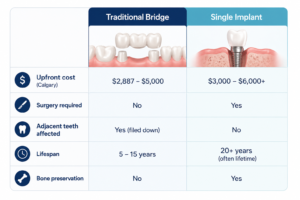
Talk to your dentist about both options. Some patients genuinely need a bridge; others are better candidates for implants.
Is a Dental Bridge Worth the Cost?
For most people, yes. Here’s why delaying treatment often makes things worse. When you lose a tooth and don’t replace it, the teeth on either side gradually drift into the gap. The tooth above or below the gap (its “opposing” tooth) can over-erupt, moving out of its normal position because it no longer has a tooth to bite against. This causes bite problems, jaw pain, and sometimes makes future restoration far more complex and expensive.
A bridge prevents all of this. It restores function, keeps your remaining teeth aligned, and maintains the structure of your jawbone and face to some degree. The cost of doing nothing often ends up being higher than the cost of the bridge itself.
Ways to Make a Dental Bridge More Affordable Without Insurance
Not having insurance doesn’t mean an affordable dental bridge is out of reach. Here are your options.
- Ask about payment plans Many Calgary dental clinics offer in-house financing or work with third-party financing providers. Spreading the cost over 12 to 24 months makes a $3,000 bridge much more manageable.
- Check eligibility for the Canadian Dental Care Plan (CDCP) The federal Canadian Dental Care Plan is available to eligible Canadians who don’t have access to private dental insurance and meet income thresholds. If you qualify, it may cover a portion of your bridge cost. Check the Government of Canada website for current eligibility criteria.
- Consider a dental school The University of Calgary doesn’t have a dental school, but the University of Alberta in Edmonton does. Students perform procedures under close supervision of licensed dentists at reduced rates. It requires more appointments and patience, but the cost savings can be significant.
- Compare clinics Dental fees in Calgary vary between clinics. Getting two or three written estimates for the same procedure is reasonable and widely accepted. Ask each clinic to itemize the quote so you’re comparing the same components.
- Prioritize oral health to avoid additional costs If the teeth adjacent to the gap need treatment before a bridge can be placed (like fillings or gum therapy), getting those addressed promptly reduces the risk of more expensive problems developing.
How Long Does a Dental Bridge Last?
A traditional bridge can last anywhere from 10 to 15 years — sometimes longer — if you keep up with brushing, flossing, and routine dental visits. Some last longer; some fail sooner, it depends on how well you care for it and your overall oral health. The most vulnerable area is under the bridge (beneath the pontic), where plaque can accumulate and cause decay on the abutment teeth or gum disease. The area under the bridge is where plaque tends to hide, so cleaning beneath it daily is non-negotiable. A floss threader or water flosser makes this much easier, ask your dentist to walk you through it at your next visit. Implant-supported bridges, when the implants are successful, can last 20 years or more.
Signs You May Need a Dental Bridge
You might be a candidate for a dental bridge if you:
- If you have one or more missing teeth with structurally sound teeth on both sides of the gap.
- Have a tooth that is too damaged or decayed to be saved and will need extraction
- Are experiencing teeth shifting or bite changes due to a missing tooth
- Want a fixed (non-removable) solution rather than a partial denture
A dental bridge is not always the right choice. If the adjacent teeth are healthy and you have sufficient bone, an implant may be a better long-term option. Your dentist will assess the bone, gum tissue, and neighboring teeth before recommending anything.
Frequently Asked Questions
How much does a 3-tooth bridge cost without insurance?
In Calgary, a standard 3-unit dental bridge without insurance typically costs about $3,500 to $5,200+, depending on materials, lab fees, and the clinic.
Is a dental bridge cheaper than an implant?
Usually yes, upfront — but implants often last longer, so the lifetime cost can be comparable or even lower for implants over the long run.
Can I get a dental bridge without insurance?
Absolutely. Most dental clinics work with uninsured patients and many offer payment plans or financing to help manage the cost.
How long does a dental bridge procedure take?
A traditional bridge typically requires two appointments over two to three weeks — one to prepare the teeth and take impressions, and a second to place the permanent bridge.
Are dental bridges permanent?
They’re fixed (not removable), but not truly permanent. Most last 10 to 15 years before needing replacement.
What is the cheapest way to replace a missing tooth?
A removable partial denture is generally the least expensive option, though it’s less comfortable and less stable than a bridge or implant.
Does insurance usually cover dental bridges?
Most workplace dental plans pick up part of the cost — often somewhere between half and two-thirds — but every plan has its own deductibles, annual limits, and waiting periods, so check yours carefully.
Conclusion
Dental bridge costs in Calgary without insurance range from around $2,887 for a basic 3-unit bridge up to $10,000 or more for implant-supported options. The type of bridge, materials used, and any additional procedures you need all affect the final number. If you’re in Calgary and want a clear, honest picture of what a bridge would cost for your specific situation, Heritage Pointe Dental can help.
Book a consultation, and our team will lay out your options clearly, provide a detailed estimate, and work with you to find something that fits your budget.
About the Author
Dr. Dharmanshu Boghara, DDS
General Dentist at Heritage Pointe Dental
Dr. Boghara has over 15 years of experience in restorative and cosmetic dentistry, specializing in front tooth fillings, dental implants, and smile restorations. Based in Calgary since 2014, he is committed to compassionate, patient-focused care and staying at the forefront of dental advancements.