
May 28, 2026 • 8 min read
Quick Answer: What Happens During a Comprehensive Dental Exam?
A comprehensive dental exam typically includes a review of your medical and dental history, a visual and physical inspection of your teeth and gums, a periodontal (gum) assessment, an oral cancer screening, and diagnostic X-rays when needed. Most new patient appointments run 45 to 60 minutes, with shorter recall visits for returning patients. Your dentist finishes by discussing findings and outlining any recommended next steps.
Introduction
Most cavities don’t hurt until they’re already deep. That’s the uncomfortable truth behind a comprehensive dental exam: the problems worth catching are usually silent, which is exactly why this appointment matters more than most patients assume.
If you’re searching for a new patient dental exam, wondering what happens during a dental exam, or simply curious about your next dental checkup South Calgary clinics recommend, this guide walks through every stage of the process, from the first conversation in the chair to the moment your dentist hands you a treatment plan.
What Is a Comprehensive Dental Exam?
A comprehensive oral examination is a complete, structured evaluation of your oral cavity.
It covers your teeth, gums, jaw, bite, and the soft tissues of your cheeks, tongue, and throat.
The goal is to build a full picture of your oral health, one your dentist can compare future visits against. This differs from a routine recall exam, which checks on a patient your dentist has already assessed. A comprehensive exam is usually performed for new patients, or for returning patients after a long gap in care, since it establishes the records ongoing monitoring depends on.
What Happens During a Comprehensive Dental Exam?
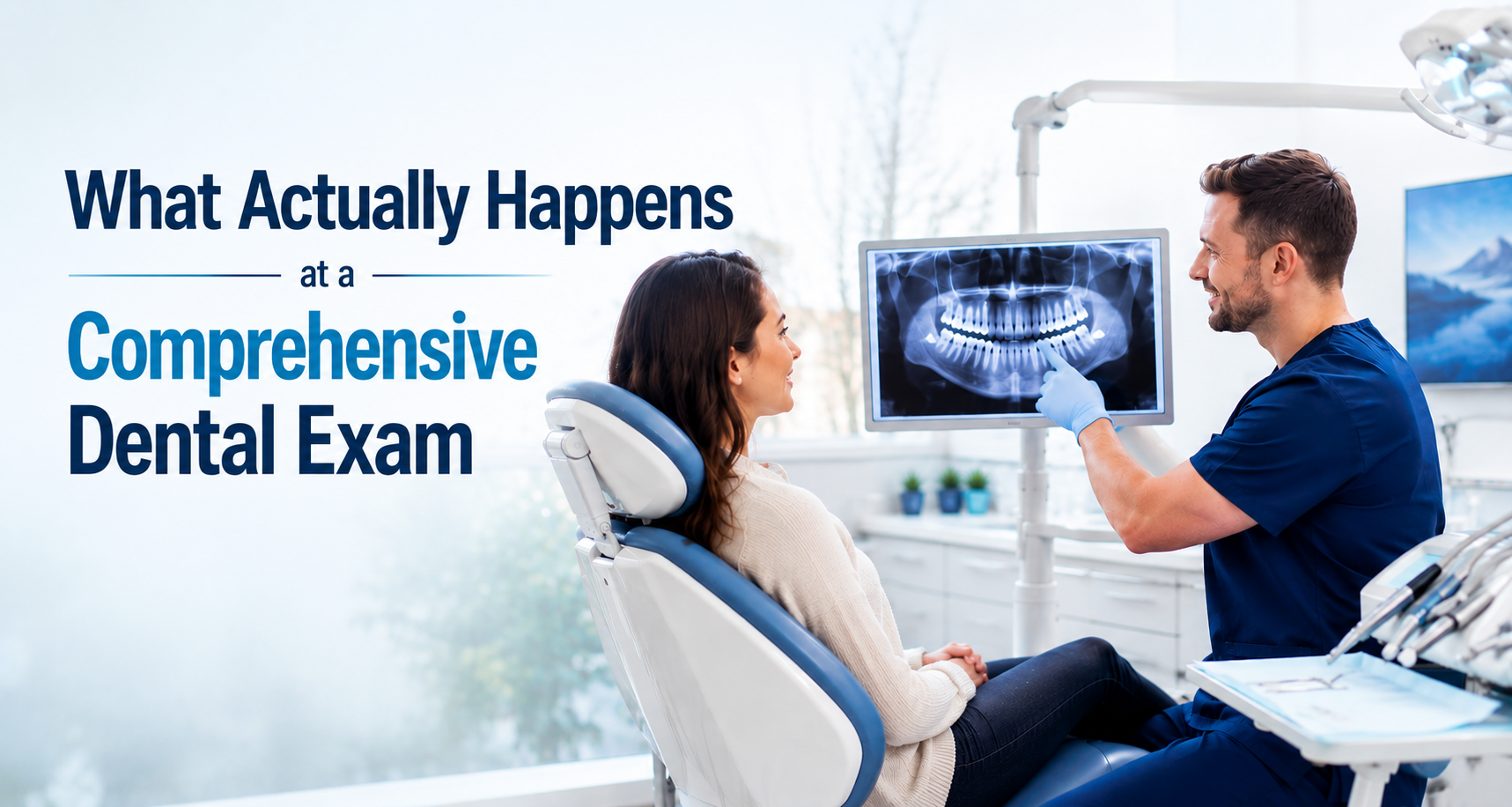
Here’s what to expect, step by step, during your visit:
- Health history review. Your dentist asks about your medical history, current medications, allergies, and any concerns you’ve noticed, such as sensitivity or jaw discomfort.
- Visual and physical examination. Your dentist examines each tooth for decay, cracks, wear, and signs of past dental work, while checking your bite alignment and jaw movement.
- Periodontal assessment. Using a small probe, your dentist or hygienist measures the depth of the pockets around your gums. Deeper pockets can be an early sign of gum disease.
- Oral cancer screening. Your dentist checks your lips, tongue, cheeks, palate, and throat for unusual sores, lumps, or discoloured patches.
- Dental X-rays. If you haven’t had recent imaging, your dentist will likely recommend X-rays to see beneath the surface, including between teeth and below the gum line, where issues aren’t visible to the naked eye. A dental exam and x-rays together give a far more complete picture than either could alone.
- Discussion and treatment planning. Your dentist reviews what was found, answers your questions, and outlines a treatment plan if anything needs attention.
Why Are Comprehensive Dental Exams Important?
The mouth is unusually good at hiding problems until they’re advanced. Gum disease in its early stage, known as gingivitis, often causes no pain at all. A cavity can grow between teeth for months before it’s visible without an X-ray.
By the time symptoms appear, treatment is frequently more involved, and more expensive, than it would have been earlier: a cavity caught early might need a simple filling, while the same cavity left for a year can progress to a root canal or extraction.
Research increasingly shows a meaningful link between oral health and overall health, which is part of why the Canadian Dental Association treats regular reexamination as core preventive care rather than an optional extra.
The appointment itself is brief; the cost of skipping it, in both money and discomfort, tends to be far larger.
What Can a Comprehensive Dental Exam Detect?
| Condition | How it’s typically detected |
| Tooth decay (including between teeth) | Visual exam plus bitewing X-rays |
| Gum disease | Periodontal probing and pocket depth measurement |
| Cracked or fractured teeth | Visual exam and bite assessment |
| Oral cancer | Visual and physical screening of soft tissues |
| Bone loss around teeth | Periapical or panoramic X-rays |
| Bite or jaw alignment issues | Physical examination of jaw movement |
| Old or failing dental work | Visual exam and X-rays |
How Long Does a Comprehensive Dental Exam Take?
For new patients, expect the appointment to run roughly 45 to 60 minutes, since it includes the full history review, X-rays, and a detailed examination. Returning patients having a routine recall exam usually spend closer to 20 to 30 minutes in the chair, since much of the baseline information is already on file.
Who Should Schedule a Comprehensive Dental Exam?
This exam is especially relevant if you’re:
- Visiting a new dental clinic for the first time
- Returning to dental care after a gap of a year or more
- Experiencing new symptoms, such as persistent sensitivity, bleeding gums, or jaw pain
- Due for a periodic reassessment as part of preventive care
- Families relocating within Calgary, or anyone searching for a dental exam Calgary clinic that’s taking new
- patients, will usually be booked for this fuller exam at their first visit.
How Often Should You Have a Comprehensive Dental Exam?
There isn’t a single rule that applies to everyone.
The Canadian Dental Association recommends setting the interval between exams individually, based on a risk assessment that considers factors like cavity risk, gum health, and cancer screening needs, rather than a fixed schedule for every patient.
In practice, many adults with healthy teeth and gums are seen every six to twelve months, while those with a history of gum disease, frequent cavities, or certain medical conditions may be advised to come in more often.
Your dentist will recommend a personalized interval based on what they observe at your exam.
What Is the Cost of a Comprehensive Dental Exam in Calgary?
Dentists in Alberta aren’t required to follow a fixed price list, so fees vary by clinic.
As a reference, the Alberta Dental Association’s 2026 suggested fee guide lists a complete exam for an adult with permanent teeth at $143.85, a periodontal exam at $259.95, and common X-rays, such as two bitewing images, at $59.90.
These are suggested benchmarks, not mandatory prices, so confirm the exact cost with your clinic, especially if X-rays or a periodontal assessment are added to your visit.
Does Insurance Cover Comprehensive Dental Exams?
Most private dental insurance plans in Alberta cover all or part of a comprehensive exam, though coverage details, annual maximums, and waiting periods vary by provider.
Check your plan, or ask your dental office to verify your benefits before your visit.
If you don’t have private insurance, you may qualify for the federal Canadian Dental Care Plan (CDCP).
The official CDCP coverage page confirms the plan covers a range of dental exams, including complete, routine, specific, and emergency exams, along with diagnostic X-rays, for eligible Canadians based on income and insurance status.
Coverage amount depends on your adjusted family net income, and some services carry frequency limits, so confirm eligibility with Service Canada or your dental office beforehand.
Is a Comprehensive Dental Exam Worth It?
Given how much a single visit can uncover, the answer is almost always yes.Gum disease, in particular, follows a pattern worth remembering: manageable in its early stages, considerably harder to reverse once bone loss has set in.
A short appointment now is consistently the cheaper, easier option compared with treating a problem that’s had months or years to develop.
Signs It’s Time to Book a Dental Exam
Book a visit sooner rather than later if you notice any of the following:
- Bleeding or swollen gums, especially when brushing or flossing
- Persistent bad breath that doesn’t improve with brushing
- Tooth sensitivity to hot, cold, or sweet foods
- Visible cracks, chips, or discolouration on a tooth
- Jaw pain, clicking, or difficulty opening your mouth fully
- It’s been longer than a year since your last dental visit
Frequently Asked Questions
What is included in a comprehensive dental exam?
A health history review, a visual and physical exam of your teeth and gums, a periodontal assessment, an oral cancer screening, and X-rays if needed.
How long does a comprehensive dental exam take?
New patient exams usually take 45 to 60 minutes. Recall exams for returning patients are shorter, around 20 to 30 minutes.Do I need dental X-rays at every exam? Not necessarily. Your dentist recommends X-rays based on your individual risk factors and how recently you had imaging done.
How often should I have a comprehensive dental exam?
This depends on your oral health. Many adults are seen every six to twelve months, though your dentist may suggest a different interval based on your risk factors.
Does insurance cover dental exams?
Most private plans cover some or all of the cost, and the federal Canadian Dental Care Plan may also apply if you meet the eligibility criteria.
Is a comprehensive dental exam painful?
No. The exam is non-invasive. Periodontal probing can feel like mild pressure, but it shouldn’t cause pain.
What is the difference between a dental checkup and a comprehensive dental exam?
A routine checkup, or recall exam, is a shorter follow-up for an existing patient. A comprehensive exam is a more detailed assessment, usually done for new patients or after a long gap in care.
Can a dental exam detect gum disease?
Yes. Periodontal probing measures gum pocket depth, one of the earliest and most reliable indicators of gum disease.
Conclusion A comprehensive dental exam is less about the appointment itself and more about what it protects you from down the road. It’s the difference between catching a problem while it’s still small and discovering it once it’s already complicated to treat.
If you’re due for a checkup, book an appointment with Heritage Pointe Dental Our team takes the time to explain what we find, and that first visit is usually the easiest part of the whole process.
About the Author
Dr. Dharmanshu Boghara, DDS
General Dentist at Heritage Pointe Dental
Dr. Boghara has over 15 years of experience in restorative and cosmetic dentistry, specializing in front tooth fillings, dental implants, and smile restorations. Based in Calgary since 2014, he is committed to compassionate, patient-focused care and staying at the forefront of dental advancements.