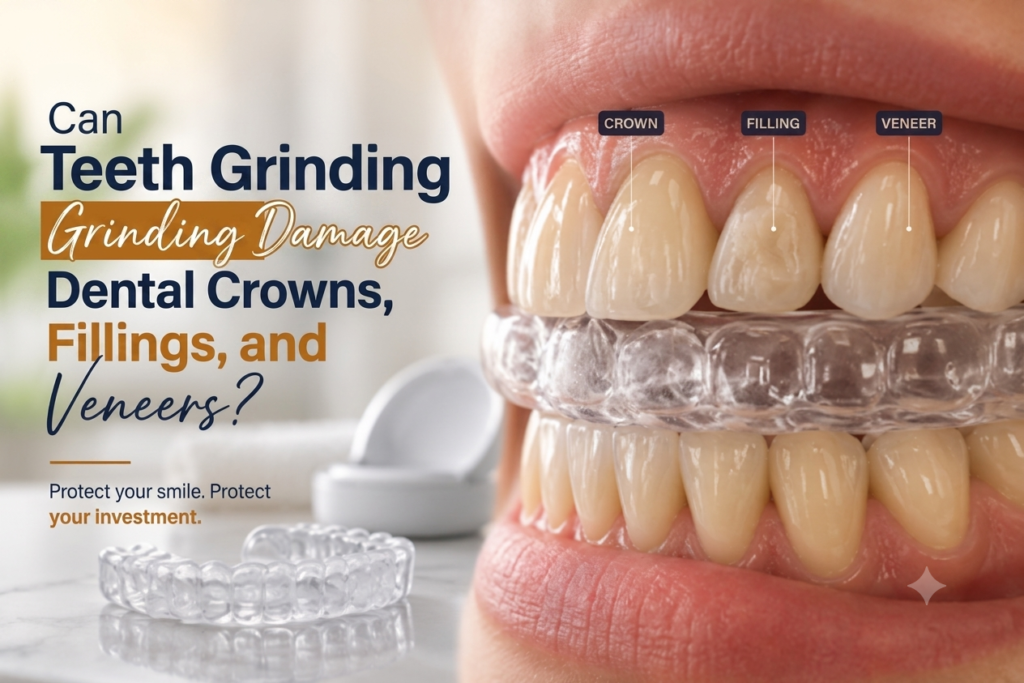
Yes, teeth grinding, known clinically as bruxism, can damage crowns, fillings, and veneers over time. The same repetitive pressure that wears down natural enamel also puts restorations under stress, and because restorative materials respond differently to that pressure than a natural tooth does, grinding can chip, crack, loosen, or wear through dental work faster than expected. If you’ve noticed a crown feels loose, a filling has a rough edge, or a veneer looks slightly off, grinding is one of the more common culprits worth ruling out, and it’s one that tends to get worse without some form of protection in place.
What Is Teeth Grinding (Bruxism)?
Bruxism is the repetitive clenching or grinding of teeth, most often during sleep, though some people grind during the day when concentrating or under stress. It’s driven by a mix of factors, including stress and anxiety, misaligned bite, sleep disorders, and in some cases certain medications. Many people don’t realize they grind at all until a partner mentions the sound, or until a dentist spots the wear pattern during a routine exam.
The force involved is significant. Nighttime grinding can generate considerably more pressure than normal chewing, and because it happens repeatedly over hours of sleep, that pressure adds up. Natural teeth can often absorb some of this stress, but restorations, particularly at their edges and margins, are more vulnerable to it.
Why Restorations Are More Vulnerable Than Natural Teeth
Natural tooth enamel has a degree of flexibility and a shock-absorbing structure underneath it that helps distribute biting and grinding forces. Restorative materials don’t always behave the same way. Porcelain and composite are strong under normal biting forces, but the margin where a restoration meets the natural tooth is a structural weak point, and repeated grinding concentrates stress right at that junction. Cement bonds, in particular, aren’t designed to withstand constant lateral pressure over months or years, which is part of why a crown or veneer that has been fine for a long time can suddenly start to feel loose once grinding becomes more frequent or more intense.
This is also why restorations sometimes fail before the surrounding natural teeth show obvious wear. A dentist assessing bruxism damage isn’t just looking at your enamel; they’re checking the fit and integrity of any existing dental work, since that’s often where problems show up first.
Can Teeth Grinding Damage Dental Crowns, Fillings, and Veneers?
In short, yes. Each type of restoration responds to grinding a little differently, but all three are at risk when bruxism goes untreated.
Crowns: A dental crown covers and protects a weakened or heavily restored tooth, but repeated grinding pressure can crack the crown material, wear down its biting surface, or loosen the cement holding it in place. A crown that starts to feel loose or shows a visible chip is a sign the underlying grinding hasn’t been addressed.
Fillings: Fillings, especially at the edges where they meet natural tooth structure, are a common failure point under grinding pressure. Repeated stress can cause a filling to crack, develop small fractures, or gradually pull away from the tooth, creating gaps where bacteria can get in.
Veneers: Veneers are thin by design, which makes them especially sensitive to the sideways and vertical forces involved in grinding. Chipped edges, hairline cracks, and, in more severe cases, a veneer coming off entirely are all associated with unmanaged bruxism.
Signs Your Restorations May Be at Risk
A few patterns tend to show up before a restoration actually fails:
- Morning jaw soreness or headaches – Often the first clue that grinding happened overnight, even if you don’t remember it.
- Flattened or worn-looking teeth – Especially noticeable on the biting edges of front teeth.
- A crown, filling, or veneer that feels different – Rough edges, sharp spots, or a sense that something has shifted are worth mentioning at your next visit.
- Increased tooth sensitivity – Thinning enamel or a compromised restoration margin can expose more of the tooth underneath.
- Visible cracks or chips – Even small ones can widen over time under continued grinding pressure.
How to Protect Crowns, Fillings, and Veneers from Grinding
The most effective way to protect existing restorations is to address the grinding itself, not just repair the damage after it happens.
A custom night guard is the most common and effective protective step. Rather than stopping the grinding motion outright, a properly fitted guard absorbs the pressure so your teeth and restorations aren’t taking the full force directly. Over-the-counter, boil-and-bite guards are widely available, but they tend to fit less precisely and can sometimes shift the bite in ways that create new problems, which is why a custom-fitted guard from your dentist is generally the more reliable option for anyone with existing dental work.
In South Calgary, a professionally fitted custom night guard typically falls in a moderate price range, and many dental insurance plans cover all or part of the cost. It’s a modest investment compared to redoing a crown, filling, or veneer, which is why dentists often frame it as protective rather than optional once grinding has been confirmed.
Beyond a night guard, a few other habits can help:
- Address the underlying cause where possible – If stress is a major driver, stress-management strategies can meaningfully reduce clenching frequency.
- Avoid chewing on non-food items – Pens, ice, and fingernails add extra, avoidable stress to restorations.
- Keep up with regular dental checkups – Catching early wear on a crown, filling, or veneer is far less costly than replacing it after it fails.
- Ask about bite adjustment – In some cases, an uneven bite contributes to grinding, and a minor adjustment can reduce the pressure on your restorations.
When to See a Dentist
Book an appointment if you notice jaw pain or headaches most mornings, if a restoration feels loose, rough, or different than usual, or if a partner has mentioned hearing you grind at night. Catching bruxism early, before it damages a crown, filling, or veneer, is generally far simpler and less expensive than replacing restorative work later. A dentist can also confirm whether grinding, rather than something else, is actually the cause of the wear you’re noticing.
Why Choose Heritage Pointe Dental for Bruxism and Restoration Care
Our South Calgary team evaluates both the grinding itself and the condition of any existing crowns, fillings, or veneers during a comprehensive exam, so any protective plan addresses the root cause rather than just the symptoms. We fit custom night guards designed around your specific bite and restorations, and we monitor your dental work at regular visits to catch early wear before it turns into a bigger repair. Patients from Heritage Pointe, Walden, Legacy, Cranston, and Seton can typically be seen for a bruxism assessment without a long wait.
Conclusion
Teeth grinding can absolutely damage crowns, fillings, and veneers, often gradually enough that the wear isn’t obvious until a restoration chips, loosens, or fails outright. The good news is that bruxism is manageable, and a custom night guard combined with regular dental checkups goes a long way toward protecting the restorative work you already have. If you’re noticing jaw soreness, a loose crown, or any change in your existing dental work, it’s worth getting it checked before the problem grows. Book a consultation with Heritage Pointe Dental to have your bite and restorations evaluated.
Frequently Asked Questions
Can teeth grinding damage dental crowns, fillings, and veneers?
Yes. Repeated grinding pressure can chip or crack crowns, loosen cement bonds, wear down or fracture fillings, and chip or dislodge veneers over time. The margin where a restoration meets natural tooth structure is especially vulnerable, so damage often shows up there before it’s visible anywhere else.
How do I know if I’m grinding my teeth at night?
Common signs include morning jaw soreness, headaches, flattened or worn-looking teeth, and increased tooth sensitivity. Many people only find out from a partner who hears the grinding, or from a dentist who spots the wear pattern during a routine exam. A dental checkup can confirm it.
Do I need a night guard if I have crowns or veneers?
A custom night guard is generally recommended for anyone with confirmed bruxism, and it becomes even more important once you have crowns, fillings, or veneers, since these restorations are more vulnerable to grinding forces than natural enamel. Ask your dentist to assess your specific risk.
How long do crowns and veneers last if I grind my teeth?
Unmanaged grinding can shorten the lifespan of crowns and veneers significantly compared to typical wear. While a well-placed restoration can last many years under normal conditions, ongoing grinding pressure increases the risk of chips, cracks, and loosening well before that timeline is reached.
What causes teeth grinding (bruxism)?
Bruxism is usually linked to stress and anxiety, an uneven bite, sleep disorders, or certain medications. It often happens during sleep without the person being aware of it. A dentist can help identify likely contributing factors and recommend an appropriate management plan.
Can children damage their teeth or dental work from grinding?
Yes, children can grind their teeth, most commonly during certain developmental stages or while teething, and it can affect any existing dental work. Most childhood grinding is temporary, but a dentist should evaluate persistent grinding to rule out damage or an underlying cause.
Is a custom night guard better than a store-bought one?
Yes, in most cases. Custom night guards are fitted precisely to your teeth and bite, offering better protection and comfort. Store-bought, boil-and-bite guards fit less precisely and can sometimes shift your bite in ways that create new problems, especially if you have existing restorations.
Is treatment for teeth grinding covered by dental insurance?
Many dental insurance plans cover all or part of the cost of a custom night guard, though coverage varies significantly by plan and provider. It is worth checking your specific policy details or asking our team to help confirm what is included before your appointment.
Can stress cause teeth grinding?
Yes, stress and anxiety are among the most common contributors to bruxism. Grinding often increases during particularly stressful periods, even in people who don’t grind regularly otherwise. Managing stress alongside using a night guard can help reduce how often and how hard you grind.
What should I do if I notice damage to a crown, filling, or veneer?
Book a dental appointment as soon as possible. Even minor chips or looseness can worsen with continued grinding, and addressing both the damage and the underlying grinding early is typically simpler and less costly than waiting until the restoration fails completely.