
November 5 , 2026 • 8 min read
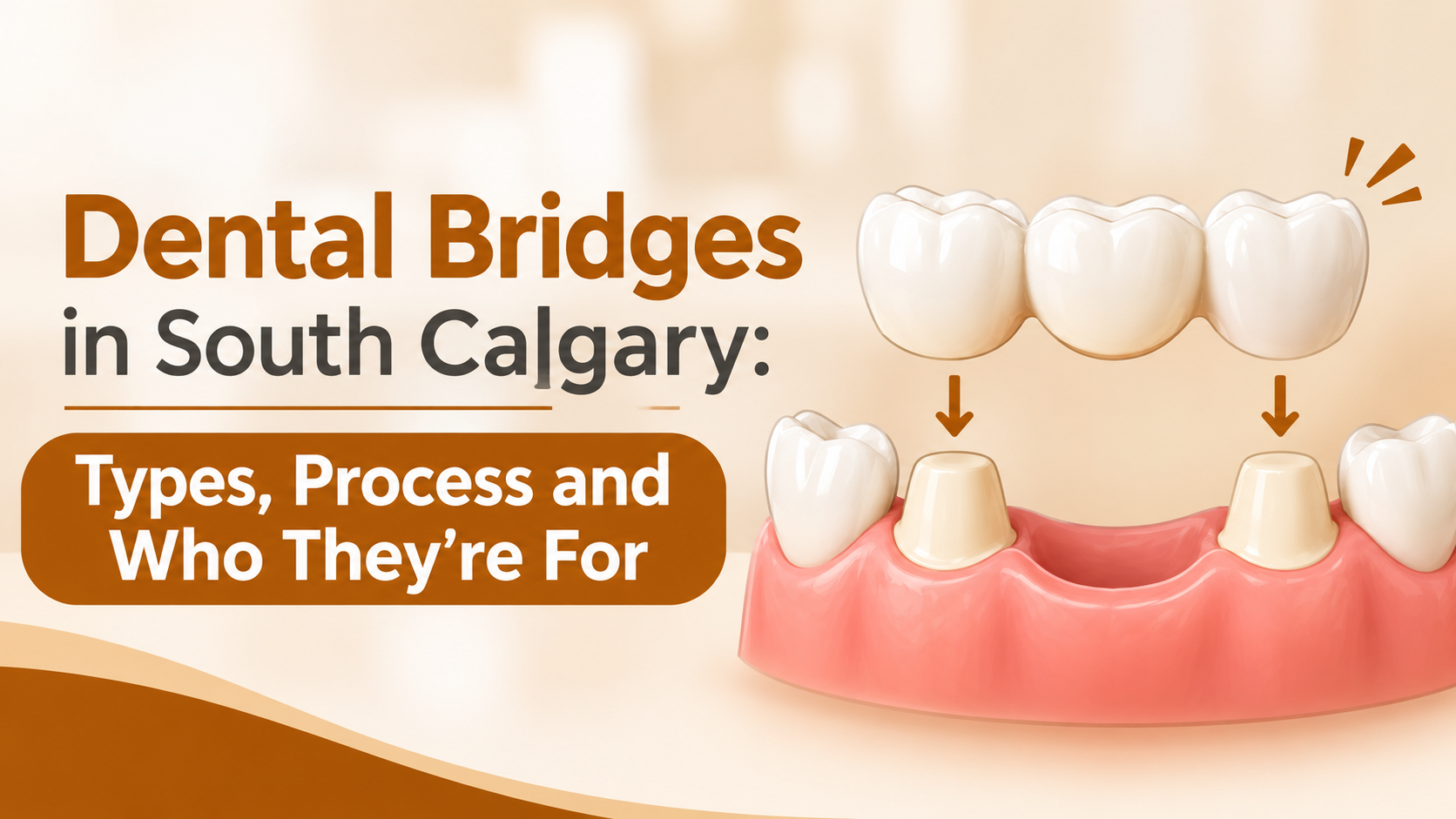
A dental bridge replaces one or more missing teeth by anchoring a false tooth to the natural teeth, or implants, on either side of the gap. The four main types are traditional, cantilever, Maryland (resin-bonded) and implant-supported bridges, and the right one depends on the health of the teeth around the gap, your bite, your budget and how long you want the result to last. A dentist has to examine your mouth to say which fits.
Quick facts
- A bridge has two parts: the false tooth (pontic) and the anchors (abutments) that hold it in place.
- Traditional bridges are the most common and use crowns on the teeth either side of the gap. Implant-supported bridges use implants instead.
- A bridge is fixed in place, so you can’t remove it at home like a denture.
- The Canadian Dental Care Plan (CDCP) lists bridges among its exclusions, so check any private plan before treatment.
This guide is general information, not a diagnosis. Your dentist will recommend a plan after examining your mouth.
What Is a Dental Bridge?
A dental bridge is a fixed restoration that fills the space left by a missing tooth. The false tooth, called a pontic, is joined to crowns or bonded wings on the neighbouring teeth, called abutments, or to dental implants. Because it’s cemented or bonded in place, a bridge feels and works more like natural teeth than a removable partial denture.
Types of Dental Bridges
| Type | How it’s held | Best suited to | Worth knowing |
|---|---|---|---|
| Traditional bridge | Crowns on the teeth on both sides of the gap | A gap with healthy teeth on both sides | Most common type; the abutment teeth must be reshaped to fit crowns |
| Cantilever bridge | Crown on one side of the gap only | A gap with a strong tooth on only one side | Puts more force on a single anchor tooth, so it’s less often used at the back of the mouth |
| Maryland (resin-bonded) bridge | Metal or ceramic wings bonded to the backs of neighbouring teeth | Front teeth with healthy, intact neighbours | Needs less reshaping, but the bond can loosen over time |
| Implant-supported bridge | Dental implants rather than natural teeth | Several missing teeth, or no healthy teeth beside the gap | Needs surgery and enough bone; usually the highest cost |
Your dentist chooses based on where the gap is, how much force that area takes when you chew, and the condition of the teeth and bone around it. If implants are on your list, our dental implants guide explains how they work.
Who Is a Good Candidate for a Dental Bridge?
Bridges tend to suit people who have:
- One to a few missing teeth in a row, rather than most of the mouth
- Healthy, strong teeth next to the gap that can support a bridge
- Healthy gums, since gum disease weakens the teeth a bridge relies on
- Good oral hygiene habits, because a bridge needs careful cleaning
A bridge may not be the best fit if the neighbouring teeth are weak, heavily filled or decayed, if gum disease is active, or if you want to avoid reshaping healthy teeth. In those cases an implant or a partial denture may be better. An exam and X-rays show what’s possible.
The Dental Bridge Procedure: What to Expect
A traditional bridge usually takes at least two visits, with a lab making the bridge in between:
- Exam and treatment plan. Your dentist checks your teeth, gums and bite, usually with X-rays, and explains your options and costs.
- Preparing the abutment teeth. After numbing, the dentist removes some enamel from the anchor teeth so crowns will fit. This reshaping is permanent.
- Impressions or scans. A mould or digital scan of your teeth goes to the dental lab to make the bridge.
- Temporary bridge. A temporary bridge protects the prepared teeth and fills the gap while the lab works.
- Fitting. At the next visit the dentist removes the temporary, checks the fit and bite, makes any adjustments, and cements the final bridge.
- Follow-up. A check confirms the bridge is comfortable and your gums are healthy.
Maryland bridges need less preparation, and implant-supported bridges involve surgery and healing time before the bridge is attached, so their timelines differ.
How Much Does a Dental Bridge Cost?
Costs depend on the type, the number of missing teeth, the materials and the lab. National averages published for Canada are about $2,500 for a traditional bridge, $2,250 for a cantilever, $1,750 for a Maryland bridge and $9,500 for an implant-supported bridge (HelloSafe). These are secondary averages, not Calgary quotes, so ask for an itemized written estimate.
A traditional bridge costs more than a single replacement tooth because it includes a crown on each abutment tooth as well as the pontic.
Insurance: The CDCP lists bridges and bridge-related procedures as exclusions (Manulife summary of the CDCP). Confirm against the current Government of Canada Dental Benefits Guide. Private plans often cover part of a bridge, so request a pre-treatment estimate. See our insurance and payment information.
Dental Bridge vs. Dental Implant vs. Partial Denture
| Dental bridge | Dental implant | Partial denture | |
|---|---|---|---|
| Fixed or removable | Fixed | Fixed | Removable |
| Needs neighbouring teeth reshaped | Usually (traditional) | No | No, but clasps rest on them |
| Needs surgery | No (except implant-supported) | Yes | No |
| Typical treatment time | Often a few weeks | Several months | Several appointments |
| Typical upfront cost | Moderate | Higher | Lower |
| Often suited to | Healthy teeth beside the gap | Enough bone and healthy gums | Several missing teeth or budget limits |
Your dentist can help you weigh these. You can also read about dentures and dental implants.
Caring for a Dental Bridge
The teeth that support a bridge still get plaque, and the area under the false tooth is hard to reach. To protect your bridge:
- Brush twice daily with fluoride toothpaste
- Clean under the pontic every day with a floss threader, interdental brush or water flosser
- Avoid chewing ice or very hard foods, which can damage the bridge
- Keep regular checkups and cleanings so your dentist can check the bridge and the anchor teeth
A bridge can last many years with good care, but it may eventually need repair or replacement. The main risks are decay or gum disease in the anchor teeth, a loose or cracked bridge, and sensitivity after reshaping the teeth.
Questions to Ask Before You Start
- Which type of bridge do you recommend for my gap, and why?
- Are my neighbouring teeth healthy enough to support a bridge?
- How much of the abutment teeth will be reshaped?
- What does the quote include, such as the temporary bridge and lab fees?
- How does a bridge compare with an implant for my situation?
- How should I clean it, and how often should you check it?
Dental Bridges at Heritage Pointe Dental
Heritage Pointe Dental lists dental bridges among its services and is at Unit 400, 412 Pine Creek Road, Heritage Pointe, AB T1S 4J9, serving South Calgary communities including Walden, Legacy, Cranston, Seton, Auburn Bay and Mahogany, as well as De Winton and Okotoks. Care is provided by general dentists. Learn more on our dental bridges page.
Frequently Asked Questions
What is a dental bridge?
A dental bridge is a fixed restoration that replaces missing teeth by attaching a false tooth to the natural teeth, or implants, on either side of the gap.
How long does the dental bridge procedure take?
A traditional bridge usually takes at least two visits, with a lab making the final bridge in between and a temporary bridge worn meanwhile. Implant-supported bridges take longer because of surgery and healing.
Does getting a dental bridge hurt?
The teeth are numbed during preparation, so you shouldn’t feel pain, though the area can be sensitive for a few days afterward. Tell your dentist if discomfort continues or worsens.
Is a dental bridge better than an implant?
Not necessarily. A bridge avoids surgery and is often quicker, but it relies on neighbouring teeth that must be reshaped. An implant stands on its own but needs enough bone and costs more. Your dentist can advise which fits.
Does the Canadian Dental Care Plan cover bridges?
The CDCP lists bridges among its exclusions. Check the current Dental Benefits Guide and your private plan before treatment.
Next step
If you’re missing a tooth, an exam shows which option fits your mouth and gives you an itemized estimate. Call Heritage Pointe Dental at 403-873-2289 or book an appointment.